
Technology Play Gaming: How Technology Is Changing the Future of Gaming
Gaming has changed dramatically over the past few decades. What once started with simple graphics, basic controls, and limited game worlds has evolved into a highly immersive digital experience. Today, technology influences almost every part of gaming, from how games are created to how players access, interact with, and experience them.
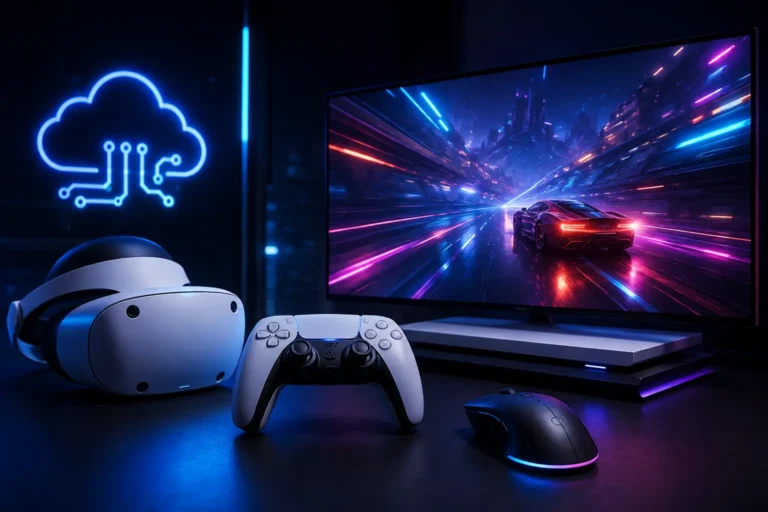
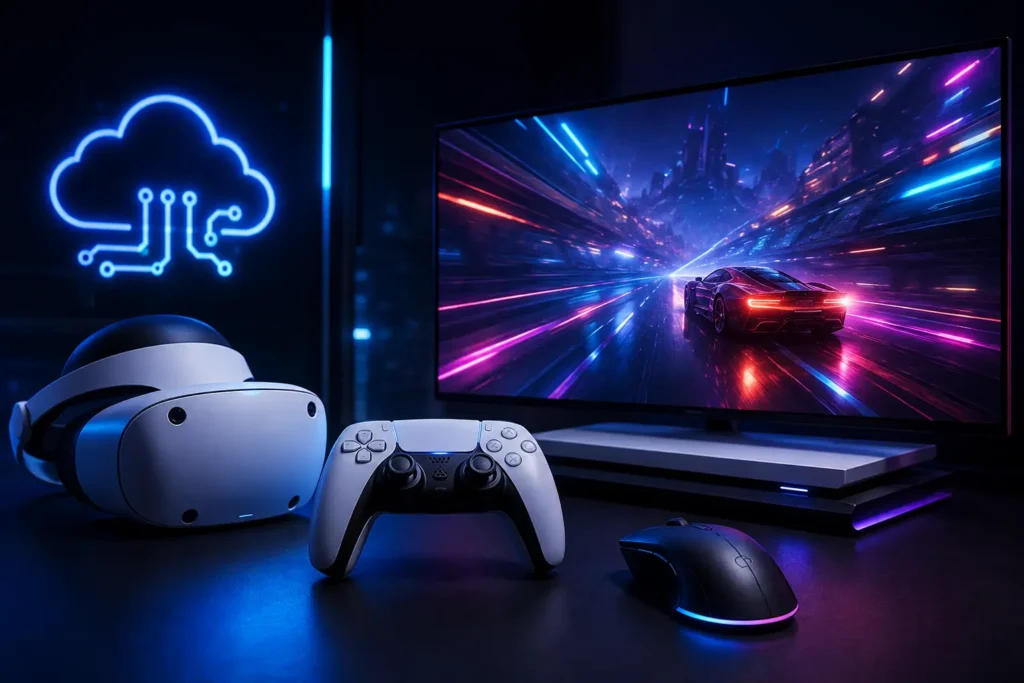
Modern gaming technology combines powerful hardware, artificial intelligence, cloud computing, high-speed connectivity, virtual reality, and advanced graphics to create experiences that feel more realistic and responsive than ever. The gaming industry is also expanding beyond traditional consoles and PCs, giving players more ways to play across different devices and platforms.
What Is Technology Play Gaming?
Technology play gaming refers to the use of modern technologies to improve how people play, experience, and interact with video games. It covers everything from gaming hardware and graphics technology to AI-powered gameplay, cloud gaming, virtual reality, and online connectivity.
In simple terms, technology has become the foundation behind modern gaming. A game is no longer just software running on a console or computer. It can involve cloud servers, intelligent systems, real-time communication, advanced rendering, motion tracking, and connected platforms working together.
This shift has also changed what players expect from games. They want smoother performance, realistic environments, responsive controls, shorter loading times, and experiences that can keep them connected with other players. As gaming technology continues to develop, these expectations are becoming increasingly important.
How Technology Has Changed Gaming
The evolution of gaming technology can be seen clearly when comparing early video games with today’s titles. Older games often had simple environments, limited characters, and predictable gameplay because hardware could only handle a small amount of information.
As processors, graphics hardware, storage, and display technology improved, developers gained more freedom to create detailed worlds. Modern game engines can render complex environments, realistic lighting, advanced physics, and highly detailed characters in real time.
The change is not limited to visuals. Technology has also transformed how games are distributed and played. Players can now download large titles digitally, update games without physical media, compete with people around the world, and move between different devices and platforms.
Cloud technology is another major development. Instead of relying entirely on local hardware to run a game, cloud gaming can process the game on remote servers and stream the experience to a supported device. Microsoft describes Xbox Cloud Gaming as a way to deliver games across a wider range of devices, including mobile devices, browsers, and selected TVs.
This makes gaming more flexible because players may not always need a powerful gaming PC or the latest console to access certain experiences. However, cloud gaming still depends heavily on network quality, with latency remaining an important factor in how responsive the experience feels.
📌 More on This Topic:: What Is Software RCSDASSK?
Key Technologies Powering Modern Gaming
Artificial Intelligence in Gaming
Artificial intelligence is becoming one of the most important technologies in modern gaming. AI has been used in games for years, particularly for controlling non-player characters and creating responsive enemy behavior. Its role is now expanding into areas such as game development, player personalization, content creation, and game discovery.
AI can help developers create more responsive characters and dynamic gameplay systems. Instead of following a small set of predictable behaviors, AI-driven systems can react to player actions and make game environments feel more alive.
The technology is also being explored as a development tool. Microsoft’s gaming AI resources highlight applications ranging from improving game discoverability and player engagement to helping developers work more efficiently.
The important point is that AI does not simply make games more difficult or intelligent. Its broader value comes from helping create experiences that can respond more naturally to players while supporting developers behind the scenes.
Cloud Gaming
Cloud gaming changes the traditional relationship between games and hardware. In a conventional setup, most of the processing happens on the player’s device. With cloud gaming, much of that work can take place on remote servers, while the resulting gameplay is streamed to the player.
This approach can reduce the hardware barrier for some players and make games available across a wider selection of devices. Microsoft’s recent cloud gaming developments show how games can be streamed through browsers, mobile devices, TVs, and other supported platforms.
However, cloud gaming is not simply a matter of having a fast internet connection. Latency, server location, device performance, and network stability can all affect the experience. That is why cloud gaming continues to depend on improvements in both software and network infrastructure.
Virtual and Augmented Reality
Virtual reality and augmented reality are pushing gaming beyond traditional screens. VR places players inside a digital environment, while AR combines digital elements with the physical world.
These technologies can make interaction feel more direct. Instead of controlling everything through a traditional controller, players can use movement, spatial positioning, and other forms of interaction to engage with virtual environments.
VR still faces challenges such as hardware cost, comfort, and accessibility, but its ability to create immersive experiences gives it an important place in the future of gaming. Newzoo has also identified VR and extended reality as growing areas, although they remain smaller than traditional gaming platforms.
Together, these technologies show why gaming is becoming more than simply playing a game on a screen. The hardware, software, connectivity, and intelligent systems behind the experience are increasingly working as one ecosystem.
How Technology Improves the Gaming Experience
Technology has not only changed how games are built; it has also changed what players experience when they play. Modern games can respond faster, look more realistic, and connect players in ways that were difficult to achieve in earlier generations.
Better Graphics and Realism
Graphics technology is one of the most visible improvements in modern gaming. Powerful GPUs and advanced rendering techniques allow developers to create detailed environments, realistic lighting, natural animations, and complex visual effects.
Technologies such as real-time ray tracing can simulate how light interacts with objects, helping create more realistic reflections, shadows, and illumination. Combined with higher-resolution displays and faster frame rates, these improvements can make digital environments feel much closer to real-world spaces.
However, better graphics are not only about making a game look attractive. Visual detail can also improve immersion by helping players understand environments, movement, and interactions more naturally.
Faster and More Responsive Gameplay
Performance is just as important as visual quality. Modern gaming hardware can process large amounts of information quickly, reducing loading times and allowing games to maintain smoother performance.
Solid-state drives have also changed how games handle large amounts of data. Faster storage can help games load assets more efficiently, while powerful processors can manage complex physics, AI behavior, and game systems simultaneously.
For competitive games, responsiveness becomes even more important. A small delay between a player’s action and the game’s response can affect the experience, particularly in fast-paced multiplayer titles. This makes hardware performance and network technology important parts of modern gaming.
More Connected Gaming Experiences
The internet has transformed gaming from an individual activity into a highly connected experience. Players can compete with friends, communicate with teammates, watch live gameplay, and participate in large online communities.
Cross-platform technology has also made gaming ecosystems more connected. Depending on the game and platform, players may be able to interact with others using different devices rather than being restricted to the same hardware.
This connectivity has created a broader gaming culture where playing, watching, communicating, and sharing content can happen around the same game.
📌 More on This Topic:: What Is a Digital Creator? Meaning, Types, Skills & How to Become One
The Role of Advanced Gaming Hardware
Modern gaming depends heavily on hardware that can handle increasingly complex software. Gaming PCs, consoles, mobile devices, displays, controllers, and other peripherals all contribute to the overall experience.
A powerful graphics processor is particularly important for rendering detailed game environments. The central processor handles other demanding tasks, including game logic, physics, AI systems, and background processes.
Displays have also evolved considerably. High-refresh-rate monitors can provide smoother motion, while technologies such as high dynamic range can improve the range of brightness and contrast in supported games.
Input devices are changing as well. Modern controllers can provide precise feedback through vibration and haptic technologies, giving players a stronger physical connection to what happens on screen.
The result is an ecosystem where individual hardware components work together rather than operating independently. A powerful GPU may improve visuals, but the full experience also depends on processing power, storage, display quality, input response, and network performance.
How Technology Is Changing Game Development
The impact of technology can be seen behind the scenes as well. Developers now have access to sophisticated game engines, development tools, artificial intelligence systems, motion-capture technology, and real-time rendering tools.
Game engines allow developers to build complex environments and interactive systems without creating every technical component from scratch. Modern engines can support advanced graphics, physics, animation, audio, networking, and multiple platforms within a single development environment.
AI-Assisted Game Development
Artificial intelligence is also becoming a useful development tool. Developers can explore AI for tasks such as generating ideas, testing systems, analyzing player behavior, creating certain types of assets, and improving workflows.
This does not mean AI replaces game developers. Building a successful game still requires creative direction, design decisions, programming, storytelling, art, sound, testing, and careful quality control.
Instead, AI can support parts of the development process and potentially allow teams to spend more time on creative and strategic work.
Real-Time Rendering and Virtual Worlds
Real-time rendering has made it possible to create increasingly detailed worlds that respond instantly to player actions. Developers can build environments with dynamic lighting, weather, physics, crowds, and interactive objects.
Motion capture has also improved character animation by allowing developers to record real human movements and translate them into digital characters. These technologies help create more believable characters and environments without relying entirely on manually created animation.
Benefits of Technology in Gaming
The biggest advantage of modern gaming technology is that it expands what games can offer. Players can experience larger worlds, richer visuals, smarter systems, and more flexible ways to play.
Technology has also made gaming more accessible in some areas. Digital distribution allows players to access games without physical copies, while cloud services can provide additional ways to play across supported devices.
For developers, advanced tools can make it possible to build ambitious projects with more sophisticated systems. Online infrastructure also allows developers to maintain and update games after release, adding new content and fixing problems over time.
At the same time, technology gives players more choice. Someone may prefer a high-end gaming PC, while another player may choose a console, smartphone, handheld device, or cloud-based service. This variety has helped gaming become a broader form of entertainment rather than a single-device experience.
Challenges of Technology-Driven Gaming
Despite its advantages, advanced technology also introduces new challenges. High-end hardware can be expensive, and players may need to upgrade devices to experience the latest games at their intended quality.
Online gaming creates another dependency. A poor internet connection can cause lag, disconnects, or delays, while cloud gaming can be particularly sensitive to network conditions.
Privacy is another consideration. Modern games and online services can collect information related to accounts, gameplay, purchases, and player behavior. Developers and platforms therefore need to handle user data responsibly and provide appropriate security measures.
There is also a balance between innovation and accessibility. New technologies can create impressive experiences, but they should not make gaming unnecessarily complicated or inaccessible to players with different devices, budgets, or abilities.
Ultimately, the value of gaming technology depends on how effectively it improves the player’s experience. The best innovations are not simply those that use the newest technology, but those that make games more engaging, responsive, accessible, and enjoyable.
📌 More on This Topic:: Best Video Marketing Tools for Businesses in 2026
The Future of Technology in Gaming
Gaming technology is moving toward experiences that are more connected, intelligent, immersive, and flexible. Instead of one technology dominating the industry, several technologies are developing together and changing different parts of the gaming experience.
Artificial intelligence is likely to play an increasingly important role. Developers are already exploring AI for game development, dialogue, character behavior, and other creative workflows. Microsoft, for example, has been developing gaming AI tools designed to support creators while keeping human creativity at the center of development.
More Intelligent Game Worlds
Future games may become more responsive to individual players. Instead of every player experiencing the same behavior, AI could help game worlds react to decisions, play styles, and changing situations.
This could make non-player characters more believable and create gameplay that feels less predictable. Microsoft’s work with AI-driven game characters already demonstrates how computationally intensive AI behavior can be integrated into multiplayer experiences.
The goal is not simply to make games harder. It is to create worlds that feel more dynamic and capable of responding naturally to what players do.
Gaming Across More Devices
Another major direction is greater flexibility between platforms. Players increasingly expect their games, progress, and communities to follow them across supported devices.
Cloud gaming can help make this possible by allowing games to be streamed to devices that may not traditionally be considered gaming hardware. Microsoft reported that Xbox Cloud Gaming supported streaming across browsers, mobile devices, selected TVs, and other platforms, showing how gaming is moving beyond dedicated consoles and PCs.
Cross-platform development is also making it easier for players to access the same gaming ecosystems from different devices. This could become increasingly important as PCs, consoles, handhelds, mobile devices, and cloud services become more closely connected.
More Immersive Gaming Experiences
Virtual reality, augmented reality, spatial interaction, advanced displays, and haptic feedback can make gaming feel more physical and immersive.
Future experiences may use these technologies together rather than treating them as separate features. Players could interact with virtual environments through movement, voice, touch, and spatial controls instead of relying entirely on traditional buttons and joysticks.
However, adoption will depend on more than technical capability. Hardware comfort, affordability, accessibility, and ease of use will determine whether these technologies become mainstream gaming tools.
Faster and Smarter Cloud Infrastructure
As games become larger and more connected, the infrastructure supporting them will become increasingly important. Cloud platforms can provide the computing power needed for online services, multiplayer experiences, AI systems, and game streaming.
Latency will remain one of the biggest challenges. Even small delays can affect gameplay, especially in competitive titles. Cloud providers are therefore working on server locations, networking, encoding, and other technical improvements to reduce the gap between player input and what happens on screen.
The future of gaming technology will therefore depend not only on what happens inside a game, but also on the systems operating behind it.
What Can We Expect From the Future of Gaming?
The next generation of gaming is likely to focus less on a single breakthrough and more on combining different technologies into smoother experiences.
AI can make characters and game systems more responsive. Cloud computing can expand where games can be played. Better hardware can improve performance and visuals, while immersive technologies can create new ways to interact with digital worlds.
At the same time, developers will need to maintain a balance between innovation and usability. New technology is valuable when it solves a real problem or improves the experience rather than being added simply because it is new.
This is why the future of gaming may not be defined by one device or platform. Instead, it could be shaped by connected ecosystems where players can move between devices, maintain their progress, interact with other players, and experience increasingly dynamic game worlds.
FAQs
What is technology play gaming?
Technology play gaming refers to the use of modern technology to improve how people play and experience video games. It includes technologies such as artificial intelligence, cloud computing, advanced graphics, virtual reality, high-speed connectivity, and modern gaming hardware.
How does technology improve gaming?
Technology can improve gaming through better graphics, smoother performance, faster loading, smarter gameplay, online connectivity, and more immersive interactions. It also gives developers advanced tools for creating larger and more detailed game worlds.
How is AI used in gaming?
AI can be used for non-player character behavior, adaptive gameplay, player personalization, game testing, content creation, dialogue, and development workflows. Its role is expanding as developers explore new ways to use AI while maintaining human creative control.
What is the future of cloud gaming?
Cloud gaming is expected to continue expanding access to games across different devices. Instead of depending entirely on local hardware, players can stream supported games from remote servers. However, network quality and latency will remain important factors in the overall experience.
Will technology replace traditional gaming?
Technology is more likely to expand traditional gaming than replace it completely. Consoles, PCs, and handheld devices will continue to serve players who prefer local gaming, while cloud services, AI, VR, AR, and cross-platform technologies can provide additional ways to play.
Conclusion
Technology has transformed gaming from a relatively simple form of digital entertainment into a connected and increasingly immersive experience. Powerful hardware, advanced graphics, artificial intelligence, cloud computing, and faster connectivity now influence almost every stage of gaming.
The biggest change, however, is not simply that games look better. Technology is changing how games respond to players, how developers build them, and how people access gaming experiences across different devices.
As these technologies continue to develop, gaming will likely become more intelligent, flexible, and interactive. The most successful innovations will be the ones that make those experiences genuinely better for players rather than simply making games more technically advanced.
For players and developers alike, the future of gaming is not just about having more technology. It is about using technology in smarter ways to create better ways to play.
⚡ Build. Rank. Grow. Follow Spy Growth.