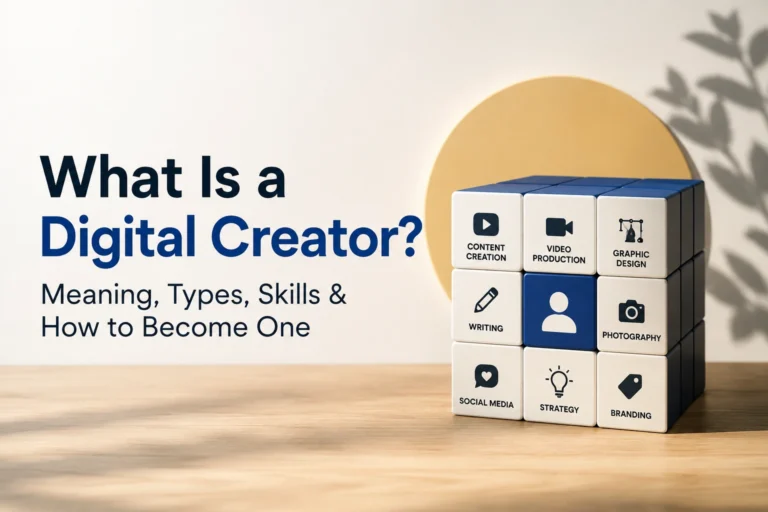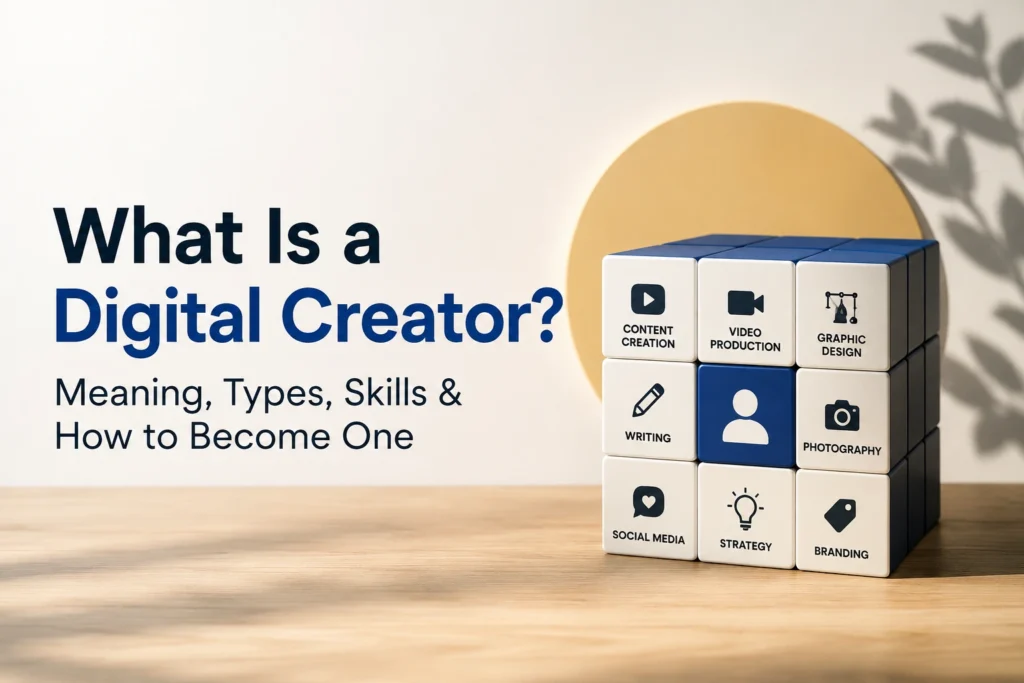
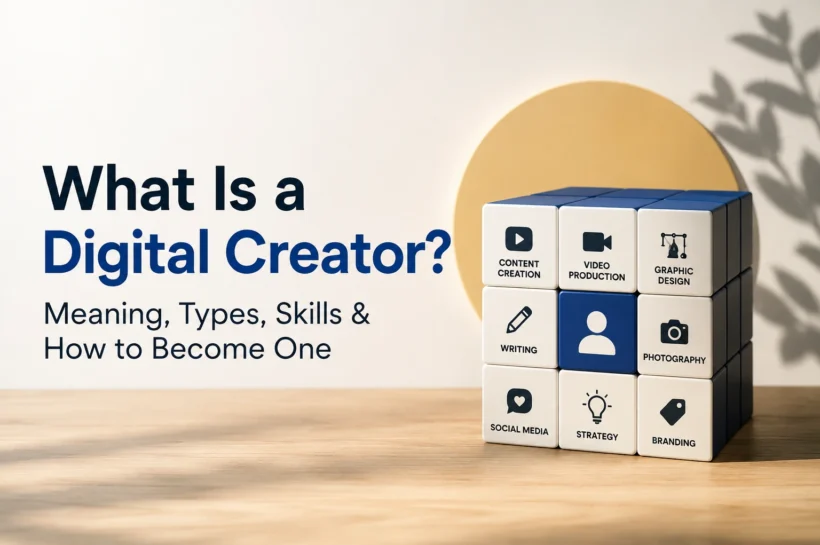

What Is a Digital Creator? Meaning, Types, Skills & How to Become One
The internet has changed the way people learn, shop, and connect. It has also created new career paths that didn’t exist a decade ago. One of the fastest-growing opportunities is becoming a digital creator. From YouTubers and bloggers to educators and designers, millions of people now build audiences and businesses by creating valuable content online.
But what is a digital creator exactly? Is it the same as a content creator or influencer? What do digital creators actually do, and why are so many brands eager to work with them?
This guide answers those questions in simple language. You’ll learn what a digital creator is, the different types of creators, how they work, and what it takes to build a successful career in today’s creator economy.
What Is a Digital Creator?
A digital creator is someone who produces original content for online platforms to educate, entertain, inspire, or inform an audience. Their content can take many forms, including videos, articles, podcasts, graphics, newsletters, online courses, or social media posts.
Unlike traditional media professionals, digital creators publish directly to platforms where they can reach audiences without relying on television networks, newspapers, or publishing companies. This direct connection allows creators to build communities, grow personal brands, and even turn their expertise into a full-time business.
The term has become increasingly popular because it reflects a broader role than simply posting content. A digital creator is often responsible for planning ideas, producing content, engaging with followers, analyzing performance, and continuously improving their work.
✨ Discover More:: 17 Types of Backlinks Every SEO Professional Should Know
Digital Creator Meaning in Simple Words
In simple terms, a digital creator is anyone who creates valuable content using digital platforms.
The goal isn’t just to upload posts. Successful creators solve problems, answer questions, share experiences, or entertain people in ways that keep audiences coming back. Whether someone teaches coding, reviews smartphones, explains finance, or shares travel experiences, they create content that delivers value to a specific audience.
This is why digital creators exist in almost every industry. Businesses, educators, artists, freelancers, and hobbyists can all become creators by consistently sharing useful or engaging content online.
Why Digital Creators Matter Today
Digital creators have become an important part of the modern internet because people increasingly trust individuals who provide authentic experiences and practical knowledge.
Instead of relying only on advertisements, many consumers watch product reviews, read blog posts, compare recommendations, or follow experts before making decisions. Educational tutorials, detailed guides, and real-world experiences often influence purchasing decisions more than traditional marketing.
For businesses, working with creators offers a way to reach highly engaged audiences. For creators, it creates opportunities to earn income while building long-term authority in a niche they genuinely enjoy.
The rise of AI tools, social media platforms, and accessible publishing software has also made content creation easier than ever. Today, anyone with knowledge, creativity, and consistency can build an audience without needing expensive equipment or a large team.
What Does a Digital Creator Do?
A digital creator’s responsibilities go far beyond publishing content. Behind every successful channel, blog, or social media profile is a process that combines creativity, research, communication, and strategy.
Most creators begin by identifying topics their audience cares about. They research ideas, verify information, and create content designed to answer questions or solve specific problems. Once the content is published, they interact with comments, respond to feedback, and monitor performance to understand what resonates with their audience.
Many creators also spend time improving search visibility, maintaining consistent branding, collaborating with other creators, and adapting their content to different platforms. A single idea might become a blog article, a YouTube video, several social media posts, and a newsletter, allowing creators to reach people wherever they consume content.
In short, digital creators combine creativity with communication and data-driven decision-making to build lasting relationships with their audiences.
✨ Discover More:: Best Marketing Tools for Photographers to Get More Clients in 2026
Different Types of Digital Creators
Digital creators work across many industries, and each focuses on a different style of content depending on their skills and audience.
Some creators specialize in educational content, breaking down complex topics into simple explanations through articles, videos, or online courses. Others focus on entertainment by producing comedy, gaming content, storytelling, or live streams that keep audiences engaged.
Some creators share professional expertise in areas such as technology, marketing, finance, health, or business. Their content helps people make informed decisions, learn new skills, or stay updated with industry trends.
Visual creators use photography, illustration, graphic design, or animation to communicate ideas, while writers publish blogs, newsletters, or ebooks that provide detailed insights. Podcasters build loyal audiences through conversations and interviews, while video creators combine visuals, editing, and storytelling to explain concepts in a more engaging way.
Although their formats differ, every successful digital creator shares one common goal: delivering consistent value to a clearly defined audience.
Digital Creator vs. Content Creator
The terms digital creator and content creator are often used interchangeably, but they are not always identical.
A content creator is anyone who produces content for any medium, whether digital or traditional. This can include writers, photographers, filmmakers, or marketers creating content for businesses, magazines, television, or print publications.
A digital creator, however, focuses specifically on content designed for digital platforms. They typically build their own online presence while creating content that reaches audiences through websites, social media, video platforms, podcasts, or newsletters.
In practice, many people fit both definitions. A YouTuber, blogger, or LinkedIn educator is both a content creator and a digital creator because their work is created and distributed through digital channels.
The distinction matters less than the purpose behind the content. Regardless of the title, success depends on creating original, useful content that people genuinely want to consume.
Digital Creator vs. Influencer
Although people often confuse these roles, they are built on different foundations.
A digital creator earns attention primarily because of the value of their content. Their expertise, creativity, or educational material attracts an audience over time.
An influencer, on the other hand, gains influence through their personal brand and relationship with followers. While many influencers also create valuable content, their ability to shape opinions and purchasing decisions is often what defines their role.
In reality, the two categories frequently overlap. A technology reviewer, fitness coach, or finance educator may begin as a digital creator and gradually become an influencer as their audience grows and brands recognize their credibility.
The most successful professionals today combine both roles by creating high-quality content while building genuine trust with their communities.
Where Do Digital Creators Work?
One of the biggest advantages of being a digital creator is the freedom to choose where to publish content. Unlike traditional careers that depend on a single employer or platform, creators can reach audiences through multiple digital channels and build a presence wherever their audience spends time.
Video creators often use platforms like YouTube for long-form educational or entertaining content, while short-form videos perform well on Instagram, TikTok, and Facebook. Professionals frequently share insights on LinkedIn, bloggers publish in-depth articles on their own websites, and podcasters connect with listeners through audio platforms.
Many experienced creators avoid relying on just one platform. Algorithms, audience behavior, and platform policies change over time, so building a presence across several channels helps create long-term stability. A blog, email newsletter, and active social media profiles together provide greater control over audience growth than any single platform alone.
✨ Discover More:: What Is Software RCSDASSK? Everything Beginners Need to Know
Skills Every Digital Creator Needs
Success as a digital creator is rarely based on creativity alone. It comes from combining creative thinking with practical skills that help produce valuable content and connect with the right audience.
Strong communication is one of the most important abilities. Whether writing an article, recording a podcast, or creating a video, the message should be easy to understand and relevant to the audience. Clear communication builds trust and encourages people to return for more content.
Research is equally important. Reliable creators verify information before publishing and present accurate insights rather than repeating unverified claims. This improves credibility and helps establish authority within a niche.
Basic storytelling also makes a significant difference. Even educational topics become more engaging when ideas are presented with logical flow, relatable examples, and smooth transitions. Instead of simply sharing facts, great creators explain why those facts matter.
Technical skills continue to grow in importance as well. Depending on the platform, creators may need to understand writing, photography, video editing, graphic design, audio production, or live streaming. Fortunately, modern tools have made these skills much easier to learn than in the past.
Search engine optimization, commonly known as SEO, helps creators make their content easier to discover through search engines. Understanding keywords, search intent, content structure, and user experience can significantly improve long-term visibility, especially for blogs and YouTube channels.
Finally, consistency separates successful creators from those who struggle to grow. Publishing valuable content regularly allows audiences to develop trust while giving platforms more opportunities to recommend that content to new users.
Tools Digital Creators Use
Digital creators rely on a wide range of tools to simplify their workflow and improve the quality of their content. The exact tools vary depending on the type of content they produce, but most creators use software that helps with planning, designing, editing, publishing, and analyzing performance.
Writers often use grammar assistants, keyword research platforms, and content editors to improve clarity and readability. Designers work with graphic design applications to create thumbnails, social media posts, and visual assets. Video creators depend on editing software that helps transform raw footage into polished videos.
Artificial intelligence has also become a valuable part of the creative process. AI tools can assist with brainstorming ideas, organizing information, improving writing, generating images, or speeding up repetitive tasks. However, successful creators treat AI as a support tool rather than a replacement for human creativity and expertise.
Analytics tools are equally important because they reveal how audiences interact with content. Metrics such as engagement, watch time, click-through rate, and search traffic help creators understand what works and where improvements are needed.
Choosing the right tools is less important than learning how to use them effectively. A simple workflow supported by consistent effort often produces better results than relying on dozens of advanced applications.
How to Become a Digital Creator
Becoming a digital creator does not require a large following, expensive equipment, or years of experience. Most successful creators begin with a simple idea and improve through continuous learning and practice.
The first step is selecting a niche that aligns with your expertise and interests. Focusing on a specific topic makes it easier to attract the right audience and establish authority over time. Broad topics usually face intense competition, while a well-defined niche allows creators to stand out more quickly.
After selecting a niche, it’s important to understand the audience. Understanding their questions, challenges, and goals helps you create content that delivers real value instead of just chasing views. The most successful creators solve real problems because helpful content naturally earns attention and trust.
Consistency comes next. Publishing regularly keeps audiences engaged while helping platforms recognize that the creator remains active. Growth may seem slow at first, but steady improvement often produces better long-term results than chasing viral success.
Learning from performance is another essential part of the process. Reviewing analytics helps identify which topics, formats, and publishing strategies perform best. Instead of guessing what audiences want, creators can make informed decisions based on real data.
Finally, patience is essential. Building a loyal audience rarely happens overnight. Most successful creators spend months or even years developing their skills, understanding their audience, and refining their content before achieving meaningful growth.
How Do Digital Creators Make Money?
One of the reasons digital creation has become a popular career choice is the variety of income opportunities it offers. Rather than relying on a single source of revenue, many creators build multiple streams of income that grow alongside their audience.
Brand partnerships are among the most common methods. Companies collaborate with creators whose audiences match their target market, allowing products or services to be introduced in a more authentic way than traditional advertising.
Affiliate marketing provides another opportunity. Creators recommend products or services and earn a commission when someone purchases through their referral link. This model works especially well when recommendations are honest and genuinely helpful.
Many creators also earn income through advertising placed on videos or websites. As content attracts more views and visitors, advertising revenue can become a steady source of passive income.
Others choose to sell their own digital products, including ebooks, templates, online courses, memberships, or premium newsletters. These products allow creators to monetize their expertise while providing additional value to their audience.
Some professionals use content creation to generate consulting opportunities, freelance projects, speaking engagements, or business leads. In these cases, content becomes a marketing asset that attracts clients rather than serving as the primary source of income.
Regardless of the monetization strategy, the strongest creator businesses share one principle: they prioritize audience trust before revenue. When people consistently receive valuable content, monetization becomes a natural extension of the relationship rather than its primary purpose.
Benefits of Being a Digital Creator
Becoming a digital creator offers opportunities that traditional careers often cannot provide. The ability to share knowledge, build a personal brand, and connect with people around the world has made content creation an attractive path for many professionals and entrepreneurs.
One of the biggest advantages is creative freedom. Digital creators can choose the topics they want to discuss, the style they want to use, and the audience they want to serve. Instead of following a fixed role, they can shape their work around their interests, skills, and long-term goals.
Another major benefit is the ability to build multiple income streams. A creator is not limited to a single paycheck. Through partnerships, digital products, consulting, memberships, and other opportunities, creators can develop a business around their knowledge and audience.
Digital creation also helps establish personal authority. Consistently sharing valuable insights allows people to recognize expertise in a specific field. This can create opportunities beyond content itself, including professional connections, collaborations, and business growth.
The global reach of digital platforms is another important advantage. A creator sitting in one country can educate, entertain, or help people anywhere in the world. This accessibility has allowed individuals from different backgrounds to build successful online careers.
However, the biggest benefit is long-term ownership. Unlike traditional advertising where businesses pay continuously for attention, creators can build assets such as websites, email lists, communities, and content libraries that continue generating value over time.
Challenges Digital Creators Face
Although digital creation offers exciting opportunities, building a successful creator career requires patience, adaptability, and consistent effort.
One of the biggest challenges is competition. Millions of creators publish content every day, making it harder to capture audience attention. Standing out requires more than simply creating content; creators need a clear perspective, unique approach, and deep understanding of their audience.
Another challenge is maintaining consistency. Creating high-quality content requires time, research, planning, and creativity. Many creators struggle with managing their workload, especially when handling content creation alongside other professional responsibilities.
Platform changes can also impact growth. Social media algorithms, search engine updates, and changing user behavior can influence how content reaches audiences. Successful creators continuously learn and adapt instead of depending entirely on one platform.
Burnout is another common issue. The pressure to publish frequently, stay relevant, and constantly produce new ideas can become overwhelming. Creating a sustainable workflow and maintaining a healthy balance is essential for long-term success.
Income uncertainty can also be challenging, especially for beginners. Building a profitable creator business usually takes time, and early stages often require patience before consistent revenue begins.
Despite these challenges, creators who focus on quality, authenticity, and continuous improvement are more likely to build sustainable success.
Best Niches for Digital Creators
Choosing the right niche plays an important role in a creator’s growth. A niche helps define the audience, topics, and type of value a creator provides.
Technology is one of the most popular areas for digital creators because people constantly search for information about software, artificial intelligence, gadgets, cybersecurity, and emerging trends. Creators who explain complex technology in simple ways can build strong authority.
Business and marketing are also powerful niches. Entrepreneurs and professionals actively seek advice about growth strategies, productivity, branding, and online business development.
Education remains one of the strongest creator categories because people are always looking to learn new skills. Language learning, career growth, programming, and professional training attract audiences who are focused on personal and professional development.
Other successful niches include finance, fitness, health, travel, food, gaming, beauty, and lifestyle. However, popularity alone should not determine a niche choice. The best niche is usually where personal knowledge, audience demand, and long-term interest come together.
Tips to Succeed as a Digital Creator
Building a successful digital creator career requires more than simply posting content. The creators who grow consistently usually follow a strategic approach.
Start by focusing on helping people rather than chasing views. Content that solves problems, answers questions, or provides useful insights has a higher chance of building trust.
Understanding your audience is equally important. Successful creators know who they are creating for, what challenges their audience faces, and what type of information they need.
Quality should always come before quantity. Publishing regularly matters, but creating meaningful content that provides real value is what builds a loyal audience.
Creators should also develop their own voice. Copying popular creators may bring temporary attention, but originality creates long-term recognition. People follow creators because of their unique perspective and personality.
Learning analytics is another valuable skill. Understanding which content performs well helps creators improve their strategy and make better decisions over time.
Finally, successful creators continue learning. Digital platforms, audience preferences, and technology constantly change. Those who adapt and improve their skills are more likely to succeed in the long run.
Conclusion
A digital creator is someone who uses online platforms to create valuable content, build an audience, and share knowledge, ideas, or experiences with the world. From bloggers and YouTubers to educators and business professionals, creators now exist in almost every industry.
The journey is not always easy. Building an audience requires consistency, patience, creativity, and a willingness to improve. However, the opportunity to build a personal brand, create multiple income streams, and reach a global audience makes digital creation one of the most exciting opportunities in the modern online world.
Anyone can become a digital creator, but success comes from providing genuine value. The creators who focus on helping their audience, building trust, and continuously improving their skills are the ones who create lasting impact.
FAQs
What is a digital creator in simple words?
A digital creator is someone who creates and publishes content online, such as videos, articles, podcasts, images, or social media posts, to educate, entertain, or inform an audience.
What does a digital creator do?
A digital creator researches ideas, creates content, publishes it on digital platforms, interacts with audiences, analyzes performance, and builds a personal brand or online business.
Is a digital creator the same as an influencer?
Not exactly. A digital creator focuses mainly on creating valuable content, while an influencer focuses on building influence and affecting audience decisions. However, many people can be both.
Can anyone become a digital creator?
Yes. Anyone with knowledge, creativity, and consistency can become a digital creator. You do not need expensive equipment or a large audience to start; improvement comes through practice and learning.
How do digital creators make money?
Digital creators earn money through brand partnerships, affiliate marketing, advertising revenue, digital products, online courses, memberships, consulting, and other business opportunities. The best monetization method depends on their audience and niche.
🚀 Grow smarter. Follow Spy Growth.